
Legacy System Modernization Without Business Disruption
We modernize outdated platforms incrementally — keeping your operations running while we rebuild, migrate, and improve the systems your business depends on.
What we build
Application Reengineering
Rebuilding core applications with modern architecture while preserving business logic. We migrate functionality incrementally so your team never loses access to critical tools.
Cloud Migration
Moving on-premise systems to cloud infrastructure with minimal downtime. We handle the complexity of hybrid environments, data migration, and security hardening.
Database Modernization
Migrating from legacy databases to modern platforms. Schema redesign, data cleaning, and zero-downtime migration strategies for business-critical data stores.
Technical Debt Reduction
Systematic identification and resolution of accumulated technical debt. We prioritize based on business impact — fixing what matters most to your operations and velocity.
Related work
Replacing a 15-year-old logistics system without disrupting 200+ daily operations
We modernized LogiTrack's aging VB.NET logistics management system to a modern React + .NET Core stack, doubling team productivity and enabling real-time fleet tracking.
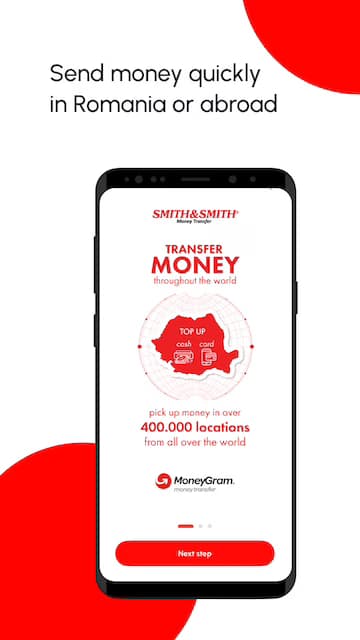

Secure, Scalable Money Transfers Built for Mobile
A custom fintech mobile application enabling fast, secure money transfers, with biometric authentication and enterprise-grade security.
Frequently asked questions
Why not just rewrite from scratch?+
Rewrites usually fail on production-critical software because (1) the old system encodes years of edge-case business rules nobody remembers, (2) the rewrite freezes new features for 12+ months while competitors keep moving, and (3) all the risk concentrates in a single big-bang cutover. The strangler-fig pattern lets you replace the system one capability at a time, with reversible cutovers — slower but dramatically safer.
Can you work with COBOL / Delphi / classic ASP / older runtimes?+
Yes. Our team has shipped production migrations from COBOL, Delphi 7, classic ASP, VB6, PowerBuilder, .NET Framework 2/3.5 and PHP 5. We don't typically write new code in those languages — we read them to extract business rules, then build the replacement in modern stacks (.NET 8, Java 21, Node.js, Python).
What if the original developers are long gone and there's no documentation?+
That's the most common scenario. Phase 1 (Audit) is partly code archaeology — we read the SQL, the stored procedures, the data, and reconstruct the business rules. We pair it with structured interviews of current users (who often know more than they realise). The audit deliverable is partly that missing documentation.
How do you avoid breaking compliance (GDPR, PCI-DSS, SOX) during the migration?+
Compliance is a constraint from day one, not a checkpoint at the end. We map current controls (audit logs, RBAC, encryption, retention policies) and ensure each one carries forward. Where the legacy system was already non-compliant (no audit log, weak crypto), modernisation is the cheapest fix — we add controls in the new code while the old system winds down.
What's the realistic downtime during cutover?+
For most engagements: minutes, not hours. The strangler-fig pattern means cutover is incremental — we move 1% of traffic, then 10%, then 100%. There's never a moment where 'the system is down for the rebuild'. Even data-layer cutovers use techniques (dual write, gradual table-by-table swap) that keep the application available throughout.
Do you handle data migration too — or just the application?+
Both, always. Application code is meaningless without the data. Our migrations include: schema design for the new database, ETL scripts (idempotent, restartable), reconciliation tooling that compares row counts and checksums, and a 90-day archival plan so the old database stays accessible for audit even after the application is decommissioned.
Related services
Custom Software Development
We build custom software for organizations where off-the-shelf tools no longer fit. From internal platforms to customer-facing systems, we engineer software that supports real workflows, scale, and long-term evolution.
Mobile Applications
We design mobile applications and internal tools as part of larger systems — not isolated products. Security, integration, and operational impact come first.
Time to modernize?
Let's assess your current systems and find the right modernization path — without risking what's already working.